
We interact with AI every day, right? It’s in our phones and streaming apps, suggesting what we might like next. But how does it really work?
That buzzword “AI” gets tossed around easily, yet the real magic (neural) networks AI (is) a mystery to most. That’s a problem.
Here’s the thing: these networks are the brain behind AI’s clever tricks. This article will strip away the complexity (no tech-speak), making sense of those digital brains. Trust me, I’ve dug deep into this stuff, and I’m here to lay it out clearly.
Ready to finally understand what powers your tech?
Neural Networks: Brainy Machines in Action
Ever wondered how a computer can recognize a dog in a photo? It’s all about neural networks AI, a system inspired by the human brain’s structure. I’m not talking about sci-fi robots (just) plain old math and data.
Imagine neurons as nodes storing bits of information. They’re like tiny data factories. But what good are neurons without connections?
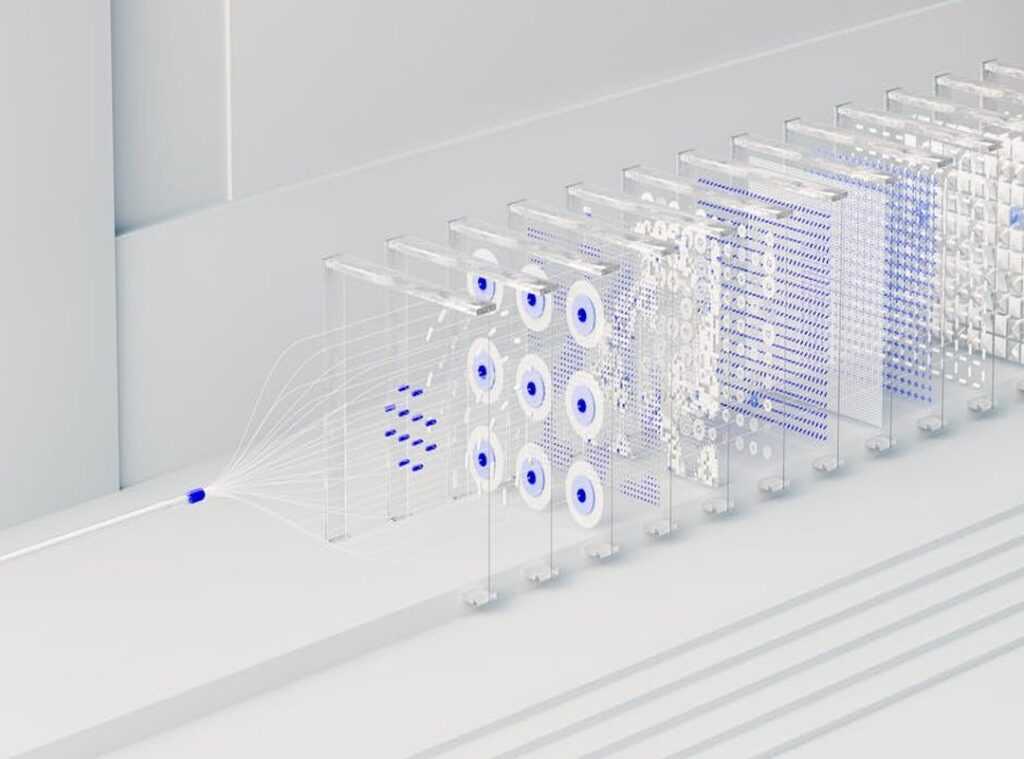
These connections are pathways linking neurons, letting them chat and share info. And when neurons band together, they form layers. Each layer has a job to do.
Here’s how it flows. Think of the input layer as a data entry point. A photo of a dog or cat goes here.
Then, the hidden layers kick in. This is where the magic happens. The system breaks down the image and figures out what’s what.
Finally, the result emerges from the output layer: dog or not a dog.
Now, how does this network learn? Simple. It tweaks those connections based on feedback.
Imagine showing it thousands of dog pictures. If the network correctly identifies a dog, the right pathways get stronger. When it messes up, those links weaken.
It’s basically trial and error (a) bit like how we learn not to touch a hot stove.
Want to dive deeper? Check out supervised vs unsupervised learning explained. It’s all about how these systems learn and adapt without needing to be spoon-fed.
So, next time you see an AI doing something cool, remember there’s a neural network working behind the scenes, just like our brains. Got it? Good.
Neural Networks: The Magic Behind AI
Neural networks are why we’ve moved past basic programming into the area of true machine learning. They’re the engines driving the intelligence in AI. Want to know how?
Let me break it down.
First up is data ingestion. This is where AI gets its fuel. Imagine feeding a neural network tons of data.
Text, images, and financial records. It’s like a buffet for the system. The more data, the better it gets.
It’s not just about quantity, though. Quality matters, too.
Next, we hit pattern recognition. This is the secret sauce. The hidden layers of the network sift through all that data, identifying patterns and connections no human could ever manually code.
It’s mind-blowing how these layers work together. They make sense of what’s otherwise a chaotic mess. This step is where the magic happens in neural networks ai.
Finally, prediction and action. Once trained, the AI can predict outcomes with amazing accuracy. It’s not just about following rules anymore (like marking an email as spam because it says “free money”).
Instead, it learns what spam looks like, adapting to new tricks as they come. That’s real intelligence.
Let’s put it into perspective. A rule-based AI is limited to what it’s told. If X, then Y.
But neural networks learn and adapt, understanding the characteristics of what’s being fed to them. They’re like a brain that keeps getting smarter. This ability to learn and predict is what sets artificial intelligence using neural network technology apart from traditional programming.
In short, neural networks are the backbone of AI’s evolution. They’re not just changing how machines work. They’re redefining intelligence itself.
Neural Network AI: Everyday Wonders
Ever wonder if neural networks AI is just a buzzword? It’s not. These networks are reshaping our daily lives in surprising ways.

Understanding Human Language
Every time I ask Siri for the weather, there’s a complex neural network at work. Voice assistants like Siri and Google Assistant use these networks to analyze language. They break down sentence structure, context, and even intent to understand your request.
Curious to learn how they pull it off? You might want to look into getting started with natural language processing. It’s where the magic begins, transforming everyday speech into actionable data right in your pocket.
Powering Recommendation Engines
Netflix knows what I want to watch next before I do. It’s a little eerie, right? It’s all thanks to neural networks.
These systems dig into your viewing habits, comparing them with millions of others. Then, like your best friend who really gets your taste, they suggest what you’ll probably binge next. The same thing happens on Spotify and YouTube, crafting playlists and video suggestions.
It’s a matchmaker, but for content.
Revolutionizing Computer Vision
Now, think self-driving cars. They’re not just a futuristic dream. They’re a reality powered by neural networks that identify pedestrians and traffic signs.
The secret lies in recognizing patterns in pixels, shapes, and textures in images. Your smartphone? It’s doing similar things whenever you open up it with your face.
Neural networks learn to distinguish features, ensuring your device stays secure. (And it spares you from having to remember yet another password.)
Neural networks AI might sound abstract. But these examples make it clear: it’s already woven into the fabric of our daily rituals. Whether it’s chatting with a virtual assistant or getting eerily accurate movie recommendations, we’re living in a world slowly transformed by this tech.
Surprised by how embedded they are? It’s just the start of what they can do.
The Next Wave: Where This Technology is Headed
Generative AI is changing the game. I’m talking about tools like ChatGPT and Midjourney. These aren’t just analyzing data.
These systems use transformers to mimic human creativity.
They’re creating original text, images, and code using advanced neural networks. Sounds like science fiction, right? But it’s real.
Now, think about the medical field. Neural networks AI is accelerating breakthroughs by spotting patterns in complex data. For example, drug discovery is faster because AI can sift through data that would take humans years to analyze.
Climate modeling and disease diagnosis are also getting a boost. It’s like having an extra brain. One that never sleeps.
But here’s the kicker. We can’t just let these solid tools run wild. Ethical AI development is key.
We have to address biases in training data. It’s not just about making cool tech; it’s about ensuring these systems do more good than harm.
Pro tip: Always question the data and the outcomes. Responsible innovation means keeping an eye on how these systems evolve. What’s the point of progress if it doesn’t benefit everyone?
That’s a question I think we’re all asking.
The Logic Behind Tomorrow’s Tech
AI isn’t magic; it’s logic. You now know that it’s all about neural networks AI. These systems don’t just learn and adapt for fun.
They solve problems in ways that are shifting the ground beneath us. You wanted clarity on this tech, and you got it. So what’s next?
Don’t see new tech as a black box. It’s the next big leap in evolution. Stay ahead.
Dive deeper into understanding. Want to be future-ready? Get takeaways from shotscribus.com.
We’re the top source for tech alerts and AI takeaways. Visit us now and step into tomorrow confidently.
 Jerold Daileytodds is the kind of writer who genuinely cannot publish something without checking it twice. Maybe three times. They came to ai algorithms and machine learning through years of hands-on work rather than theory, which means the things they writes about — AI Algorithms and Machine Learning, Tech Toolkit Solutions, Scribus Network Protocols, among other areas — are things they has actually tested, questioned, and revised opinions on more than once.
That shows in the work. Jerold's pieces tend to go a level deeper than most. Not in a way that becomes unreadable, but in a way that makes you realize you'd been missing something important. They has a habit of finding the detail that everybody else glosses over and making it the center of the story — which sounds simple, but takes a rare combination of curiosity and patience to pull off consistently. The writing never feels rushed. It feels like someone who sat with the subject long enough to actually understand it.
Outside of specific topics, what Jerold cares about most is whether the reader walks away with something useful. Not impressed. Not entertained. Useful. That's a harder bar to clear than it sounds, and they clears it more often than not — which is why readers tend to remember Jerold's articles long after they've forgotten the headline.
Jerold Daileytodds is the kind of writer who genuinely cannot publish something without checking it twice. Maybe three times. They came to ai algorithms and machine learning through years of hands-on work rather than theory, which means the things they writes about — AI Algorithms and Machine Learning, Tech Toolkit Solutions, Scribus Network Protocols, among other areas — are things they has actually tested, questioned, and revised opinions on more than once.
That shows in the work. Jerold's pieces tend to go a level deeper than most. Not in a way that becomes unreadable, but in a way that makes you realize you'd been missing something important. They has a habit of finding the detail that everybody else glosses over and making it the center of the story — which sounds simple, but takes a rare combination of curiosity and patience to pull off consistently. The writing never feels rushed. It feels like someone who sat with the subject long enough to actually understand it.
Outside of specific topics, what Jerold cares about most is whether the reader walks away with something useful. Not impressed. Not entertained. Useful. That's a harder bar to clear than it sounds, and they clears it more often than not — which is why readers tend to remember Jerold's articles long after they've forgotten the headline.