
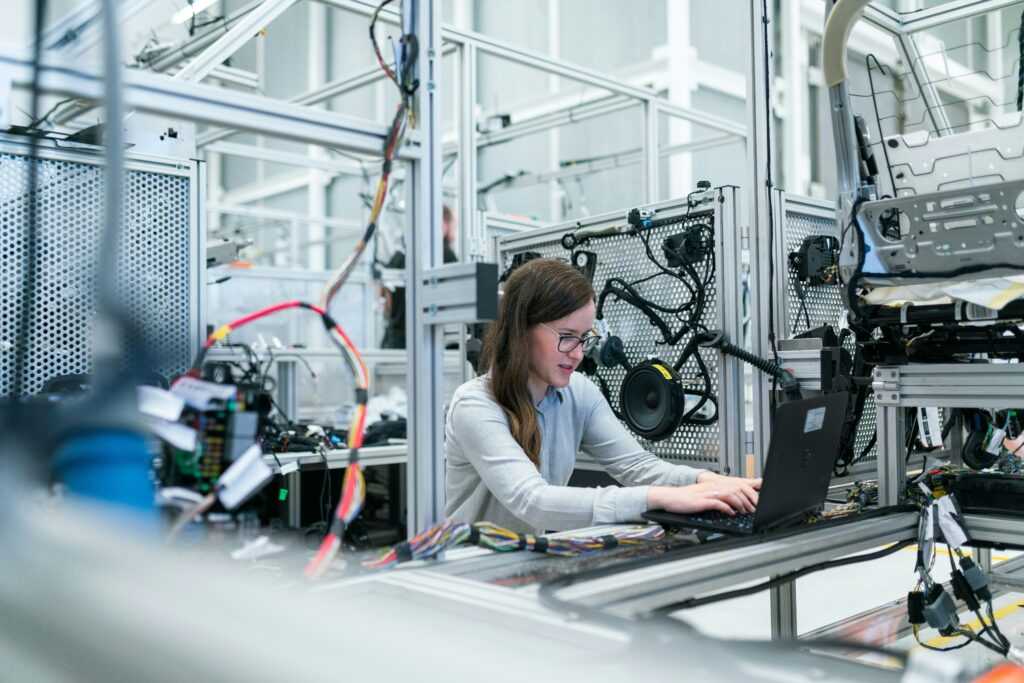
Digital transformation in manufacturing tends to get talked about in terms of the most visible investments: robotics, automated quality control, predictive maintenance, connected sensors on the production line itself. These are real, valuable upgrades. But a growing number of manufacturing leaders are discovering that some of their most persistent quality and cost problems never actually start on the line at all. They start earlier, at the point where materials and components from outside suppliers first enter the business.
That earlier point rarely gets the same digital attention as the factory floor, and that gap is becoming an increasingly expensive blind spot.
Why the Earliest Point in the Process Deserves the Most Attention
According to the American Society for Quality, verifying incoming material against agreed specifications is one of the fundamental categories in any serious cost of quality framework, precisely because catching a problem at this early stage is dramatically cheaper than catching it later. A defect identified before it enters production costs a rejection and a conversation with a supplier. The same defect discovered further downstream costs wasted labor, scrapped material, and sometimes a damaged customer relationship.
This is a business math problem as much as an operational one. Every business that manages physical goods eventually has to decide how much verification happens at the earliest possible point versus how much risk gets carried forward and dealt with later, often at a much higher cost. The decision itself is rarely made consciously. More often, it’s simply inherited from whatever process happened to be in place years ago, long before anyone thought to ask whether it still made sense.
The Digital Gap Hiding in Plain Sight
Most manufacturing businesses have already digitized the parts of their operation that are easiest to see: production scheduling, inventory systems, quality dashboards on the line itself. The intake of materials from outside suppliers is often the one part of the process still running on paper, memory, or a quick note that never gets connected to anything else.
That gap matters because it’s exactly where accountability tends to break down. When a defect surfaces weeks later, tracing it back to a specific incoming shipment or supplier becomes a matter of reconstructing a story rather than checking a record. Without a clear, time-stamped account of what a shipment actually looked like on arrival, disputes over responsibility often come down to whoever has the more convincing argument, not whoever is actually right, which is a strange place for any modern business to still be operating from.
| Business Consideration | Undigitized Intake Process | Digitally Documented Intake |
|---|---|---|
| Traceability | Relies on memory or handwritten notes. | Searchable records tied to purchase order and supplier. |
| Supplier Accountability | Based on disputed recollection. | Backed by clear, verifiable evidence. |
| Time to Resolve Disputes | Days spent reconstructing what happened. | Minutes spent reviewing an existing record. |
| Visibility Across Teams | Siloed with whoever handled the shipment. | Shared across quality, purchasing, and operations. |
What Closing This Gap Actually Looks Like
This is where inbound quality documentation for manufacturers fits into the broader digital transformation story. Rather than treating the intake of materials as an administrative afterthought, businesses are extending the same digital discipline they’ve already applied to production, scheduling, and inventory to the earliest point where outside materials enter the business. A verified, searchable record of incoming goods condition verification becomes just another data point the organization can rely on, the same way a sales dashboard or a production schedule already is.
That shift changes the nature of supplier relationships too. A supplier who knows every shipment is documented has a clear incentive to ship more carefully. A business with real manufacturing proof of condition on hand spends less time in unproductive disputes and more time addressing the actual root cause of a quality issue, wherever it originated.
Why This Fits Into a Bigger Digital Skills Conversation
Businesses investing in digital skills and modernization often focus on the most technically impressive systems first, automation, AI-driven analytics, connected machinery. Those investments matter. But a genuinely mature digital operation also looks at the less glamorous parts of the business, like how materials are verified on the way in, and asks whether that part of the process has kept pace with everything else.
Closing this kind of gap doesn’t require a massive technology overhaul. It requires recognizing that a business’s digital maturity is only as strong as its weakest, least-modernized touchpoint, and that touchpoints involving outside suppliers are often exactly where that weakness quietly lives.
The Broader Business Case
None of this is really about any single shipment or any single supplier dispute. It’s about what a business is actually optimizing for when it decides where to invest its modernization efforts. A company that only digitizes the parts of operations it already controls internally is leaving one of its biggest sources of risk, everything that enters from outside its own walls, running on the least reliable system available: memory and paper.
The businesses getting ahead of this aren’t necessarily spending more on technology overall. They’re recognizing that a complete digital strategy has to account for every point where risk enters the business, not just the parts that happen to be the most visible or the easiest to automate first.
Treating inbound quality documentation for manufacturers as a genuine part of the modernization strategy, not an afterthought bolted on after the more exciting systems are already in place, tends to be the difference between a business that talks about digital transformation and one that’s actually completed it, end to end, from the loading dock all the way through to the finished product.
 Drevian Quenvale writes the kind of ai algorithms and machine learning content that people actually send to each other. Not because it's flashy or controversial, but because it's the sort of thing where you read it and immediately think of three people who need to see it. Drevian has a talent for identifying the questions that a lot of people have but haven't quite figured out how to articulate yet — and then answering them properly.
They covers a lot of ground: AI Algorithms and Machine Learning, Tech Innovation Alerts, Expert Tutorials, and plenty of adjacent territory that doesn't always get treated with the same seriousness. The consistency across all of it is a certain kind of respect for the reader. Drevian doesn't assume people are stupid, and they doesn't assume they know everything either. They writes for someone who is genuinely trying to figure something out — because that's usually who's actually reading. That assumption shapes everything from how they structures an explanation to how much background they includes before getting to the point.
Beyond the practical stuff, there's something in Drevian's writing that reflects a real investment in the subject — not performed enthusiasm, but the kind of sustained interest that produces insight over time. They has been paying attention to ai algorithms and machine learning long enough that they notices things a more casual observer would miss. That depth shows up in the work in ways that are hard to fake.
Drevian Quenvale writes the kind of ai algorithms and machine learning content that people actually send to each other. Not because it's flashy or controversial, but because it's the sort of thing where you read it and immediately think of three people who need to see it. Drevian has a talent for identifying the questions that a lot of people have but haven't quite figured out how to articulate yet — and then answering them properly.
They covers a lot of ground: AI Algorithms and Machine Learning, Tech Innovation Alerts, Expert Tutorials, and plenty of adjacent territory that doesn't always get treated with the same seriousness. The consistency across all of it is a certain kind of respect for the reader. Drevian doesn't assume people are stupid, and they doesn't assume they know everything either. They writes for someone who is genuinely trying to figure something out — because that's usually who's actually reading. That assumption shapes everything from how they structures an explanation to how much background they includes before getting to the point.
Beyond the practical stuff, there's something in Drevian's writing that reflects a real investment in the subject — not performed enthusiasm, but the kind of sustained interest that produces insight over time. They has been paying attention to ai algorithms and machine learning long enough that they notices things a more casual observer would miss. That depth shows up in the work in ways that are hard to fake.