
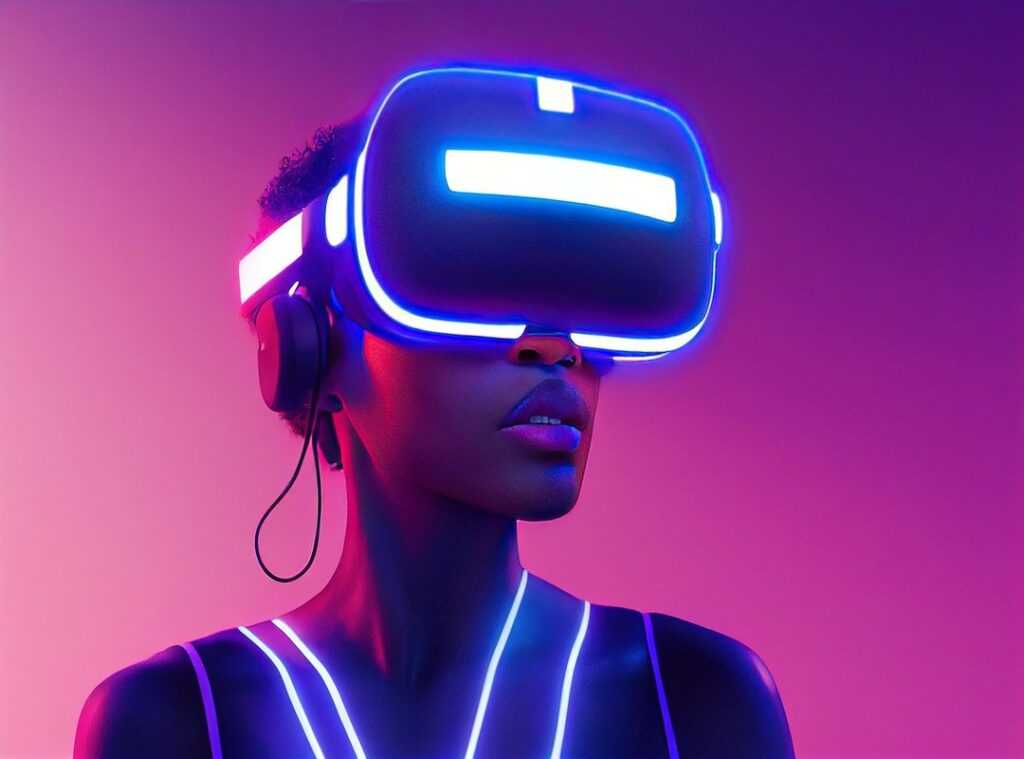
Caught up in the whirlwind of tech? You’re not alone. Augmented reality innovations are reshaping everything. Trust me, I’ve seen the transformation.
It’s not just hype; it’s happening. Imagine blending digital elements with the physical world in real-time. Sounds like sci-fi?
It’s becoming reality fast.
We see this shift in retail, education, even healthcare. Why should you care? Because it impacts how you interact with everything around you.
The potential is huge, and ignoring it isn’t an option anymore. But what does it truly mean for you?
This isn’t just about cool gadgets. It’s about enhancing everyday experiences and solving problems that seemed impossible before. From interactive learning environments to revolutionizing shopping experiences, the changes are deep.
But here’s the catch: understanding these innovations can be overwhelming. That’s why we’re diving deep into the latest breakthroughs and how they affect you. Ready to explore?
Let’s get started.
The Foundational Leap: Redefining Our Interaction with Space
Before augmented reality innovations can dazzle us with overlays, the tech needs to grasp the real world. It’s like teaching a computer to see and understand your living room before it invites holograms over for coffee. Let’s break it down.
Advanced SLAM: Digital Memory for Physical Spaces
I remember when SLAM was basic. Just room mapping. Those days are gone.
Now, SLAM is a beast, handling persistent, multi-user world-tracking. Imagine two people wearing AR glasses, seeing the same virtual object in the exact spot. It’s mind-blowing.
This shift makes collaborative AR possible in ways we couldn’t predict. Industrial applications love it. Factories and warehouses can’t get enough.
Real-Time 3D Scene Understanding
Forget simple plane detection. We’re talking identifying objects, surfaces, even how someone is standing in real-time. Ever watched a virtual ball bounce off a real table?
It’s impressive. This level of understanding means AR can interact with the world like we do. It’s not just smart.
It’s intuitive.
Miniaturization and Power Efficiency
Here’s a tough one: cramming solid sensors into small wearables. We want all-day AR glasses without the battery meltdown. Engineers are tackling this.
The key? Balancing sensors like IMUs, depth sensors, and cameras. Wearable tech can’t afford to look clunky or die at lunch.
In this journey of augmented reality, learn more about how these innovations connect with emerging trends. It’s a wild ride. We’re redefining how we interact with space, and it feels like we’re just getting started.
This leap forward isn’t just technical. It’s foundational. The future’s not just here.
It’s actively learning our world.
Sharpening the Virtual Eye: Breakthroughs in Display and Optics
Let’s get real. The display is the heart of augmented reality. Without a good one, it doesn’t matter how cool your software is. It’s like having a Ferrari engine in a rusty old sedan.
You need a strong visual interface for the magic to happen.
The Shift to Waveguide and MicroLED Displays
Waveguide displays are the unsung heroes of AR. Think of them as light pipes for your eyes. They replace the clunky ‘birdbath’ optics.
You know, those bulky things you wouldn’t want on your face. Waveguides offer transparency and brightness while being compact. Then there’s MicroLED technology, poised to push us further with better color and efficiency.
It’s all about having a leaner, meaner machine on your head.
Expanding the Field of View (FoV)
Field of View is your window to the virtual world. Imagine looking through a keyhole versus a vast panoramic window. A wider FoV makes everything more immersive and natural.
But achieving this isn’t a walk in the park. Engineers grapple with distortion and the dreaded bulkiness that comes with a larger view. Yet, cracking this will mean a massive leap in augmented reality innovations.
Solving the Vergence-Accommodation Conflict
Ever felt eye strain with AR? That’s the vergence-accommodation conflict in action. Your eyes focus at screen distance but converge elsewhere, causing discomfort.
Varifocal lenses are stepping in as the hero. They adjust focus dynamically, making long AR sessions as comfortable as binge-watching your favorite series. (Pro tip: Watch for new headset models featuring these lenses.)
The future of AR lies in these innovations. Without them, all the potential in the world remains just that. Potential.
The Brains of the Operation: AI and Machine Learning in AR
Augmented reality isn’t just a flashy gimmick anymore. It’s smarter and more engaging thanks to AI. Have you noticed how it transforms a basic display into a digital assistant?

AI acts as that smart layer making AR context-aware. It’s like having Jarvis from Iron Man on your phone.
Imagine interacting with AR using gestures, gaze, and voice. Machine learning models now allow for precise and effortless communication with AR content. Gone are the days of tediously pointing and clicking.
We’re talking about subtle gesture recognition that feels almost natural. It’s a smooth experience if you ask me. Eye-tracking predicts what you’re about to look at, reducing lag.
It’s spooky how accurate it feels sometimes.
Generative AI takes things further, creating AR assets on-the-fly. Picture this: you command, “Place a modern-style chair here,” and boom, the AI generates a 3D model that fits perfectly in the room’s lighting. This isn’t just clever; it’s new.
Generative AI isn’t playing around. It learns and adapts, offering on-the-fly solutions that boost your AR experience.
Then there’s foveated rendering, an absolute game-changer. It smartly renders what’s directly in your gaze with high clarity, saving processing power by blurring the periphery. Talk about fast!
AI-powered gaze tracking anticipates where you’ll look next. Less latency, smoother performance. You don’t even realize it’s happening.
It’s that smooth.
The blockchain beyond cryptocurrency new uses might sound unrelated, but it’s another frontier of tech innovation. As AR continues to evolve, AI integration ensures we aren’t just seeing augmented reality innovations. We’re experiencing them.
The future isn’t coming; it’s already here, unfolding through intelligent layers and game-changing models. Aren’t you curious to see what’s next?
Connecting the Digital Fabric: AR’s Shared Reality
Let’s talk about the real magic of augmented reality innovations. It’s not just what you see on one device. The true power lies in shared experiences.
Imagine seeing the same digital object as your friend, no matter where they are. This is bigger than any single gadget.
5G and edge computing are game changers here. Ever tried running complex AR on a small device? It’s like trying to watch a blockbuster on an old TV. 5G’s low latency and high bandwidth make it possible to render these experiences smoothly.
Edge computing processes data closer to you. This means your lightweight glasses can handle photorealistic AR without frying your brain. (Or overheating your device.)
Now, about Cloud Anchors. These are not just fancy tech words. They’re what allow virtual content to stick to real-world locations.
You and your friends can see the same AR object in the same spot, even if you’re on different devices. It’s like pinning a note on a wall for everyone to see. This technology builds the foundation for a true ‘AR Cloud’ or ‘metaverse layer’.
Remember the early days of mobile apps? Every developer had to create separate versions for different phones. It was chaos.
Interoperable spatial computing frameworks, like OpenXR, are changing that. They let developers create AR experiences that work across various hardware. It’s like speaking a universal language that all devices understand.
Curious how this all plays out in real life? Think of Pokémon Go but on steroids. We’re talking persistent, shared worlds.
We’re only scratching the surface, and I’m here for it. Are you? The future of AR isn’t just about what we see.
It’s about what we share.
The Real Foundations of AR’s Future
Augmented reality isn’t just a flashy buzzword. It’s about the augmented reality innovations we build today. You came here wading through hype, looking for what really matters.
Now you get it: optics, AI, and connectivity. These are the pillars. With this new understanding, you can see through the noise.
Evaluate AR products with a sharper eye. Is that headset truly new or just shiny marketing? Trust me.
It’s not as complex as it seems.
Curiosity is your ally. Keep exploring those digital frameworks. Stay hungry for what’s next.
Want to stay ahead? Dive into the intersection of tech and reality. Embrace this knowledge.
You’re armed to recognize true progress. For more takeaways, explore resources at places like shotscribus.com. Don’t let the wave pass you by.
Start engaging with this tech evolution now.
 Drevian Quenvale writes the kind of ai algorithms and machine learning content that people actually send to each other. Not because it's flashy or controversial, but because it's the sort of thing where you read it and immediately think of three people who need to see it. Drevian has a talent for identifying the questions that a lot of people have but haven't quite figured out how to articulate yet — and then answering them properly.
They covers a lot of ground: AI Algorithms and Machine Learning, Tech Innovation Alerts, Expert Tutorials, and plenty of adjacent territory that doesn't always get treated with the same seriousness. The consistency across all of it is a certain kind of respect for the reader. Drevian doesn't assume people are stupid, and they doesn't assume they know everything either. They writes for someone who is genuinely trying to figure something out — because that's usually who's actually reading. That assumption shapes everything from how they structures an explanation to how much background they includes before getting to the point.
Beyond the practical stuff, there's something in Drevian's writing that reflects a real investment in the subject — not performed enthusiasm, but the kind of sustained interest that produces insight over time. They has been paying attention to ai algorithms and machine learning long enough that they notices things a more casual observer would miss. That depth shows up in the work in ways that are hard to fake.
Drevian Quenvale writes the kind of ai algorithms and machine learning content that people actually send to each other. Not because it's flashy or controversial, but because it's the sort of thing where you read it and immediately think of three people who need to see it. Drevian has a talent for identifying the questions that a lot of people have but haven't quite figured out how to articulate yet — and then answering them properly.
They covers a lot of ground: AI Algorithms and Machine Learning, Tech Innovation Alerts, Expert Tutorials, and plenty of adjacent territory that doesn't always get treated with the same seriousness. The consistency across all of it is a certain kind of respect for the reader. Drevian doesn't assume people are stupid, and they doesn't assume they know everything either. They writes for someone who is genuinely trying to figure something out — because that's usually who's actually reading. That assumption shapes everything from how they structures an explanation to how much background they includes before getting to the point.
Beyond the practical stuff, there's something in Drevian's writing that reflects a real investment in the subject — not performed enthusiasm, but the kind of sustained interest that produces insight over time. They has been paying attention to ai algorithms and machine learning long enough that they notices things a more casual observer would miss. That depth shows up in the work in ways that are hard to fake.